About Terence L. Sadler
About
Terence L. Sadler
Decades in security taught me something simple: people matter more than technology.
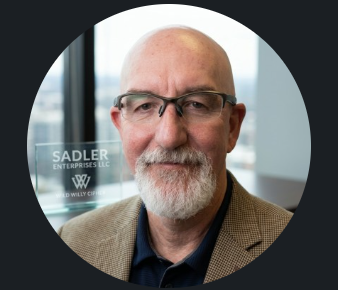
Terry has spent more than four decades around security, intelligence, technology, leadership, and public service. The thread connecting those years is simpler than a résumé: helping people understand risk and make better decisions.
Why I Built Cybersecurity for Everyone
Roots in Louisiana
I grew up in rural Louisiana, in a close-knit community where neighbors knew one another and looked out for one another. My father had served in the Air Force, so looking back, serving in some capacity almost seemed natural. After he retired from the military, he worked on oil-field rigs and was away from home a lot. From him I learned what hard work looked like.
As a teenager, I hauled hay during Louisiana summers to earn money. It was hot, humid, dirty work, and most days ended with scratches across my forearms. Horses, hunting, fishing, boats, and the bayous were part of ordinary life too. So was accountability. If you got into trouble down the road, word usually beat you home.
Those years taught me two things that stayed with me: work matters, and people look out for one another.
Service Became a Way of Life
Twenty years in the U.S. Navy as a cryptologist, including tours in Japan, taught me how intelligence, operations, and leadership actually work under pressure. After that came more than two decades as a Department of the Army civilian in security and intelligence, including information assurance and security management.
The technical work mattered. What stayed with me more was this: good processes alone do not keep an organization secure. Written policy is not enough. People settle into routines, and complacency is often the opening. Security has to fit real human behavior, or it will be walked around.
A red team once arrived at a secured facility in convincing uniforms and projected authority. A young soldier let them through. No sophisticated exploit was required.
The process existed. The human assumption defeated it.
The Leaders I Remember Knew Their People
The leaders I remember most were not memorable because of rank. They were present. Master Chief Robert E. Hall was one of the first leaders who showed me what presence looked like. At a large command in Misawa, he made a point of getting out among people and knowing the sailors he served. I knew him only briefly before his death, but the example stayed with me: leadership is not something you practice only from behind a desk. Rear Admiral Sean Filipowski handled his administrative work early, then got out among his sailors. Commander Al Kinney — who later wrote the foreword to Cybersecurity for Everyone — gave me room to grow and bring new ideas back to the command. Leaders such as Francesca Zimba and Dan Gigstead modeled hard work, care, and genuine connection.
Leadership began with presence. People felt seen. That is the kind of leader, teacher, and neighbor I have tried to be.
Community Travels With You
I do not separate professional service from community life. On active duty that meant showing up where there was a need: volunteering at the Duksung Boyeog Orphanage in Busan, joining the Red Feather campaign in Misawa, teaching English to adults and children in Japan.
In Okinawa, Reiko and I learned to play the sanshin together. We were invited into community life — helping when asked, attending festivals, taking part rather than watching from the edge. My Japanese grew more comfortable in those years. I will not forget Kazuhiro Asato, who taught me more about Okinawan culture by sitting down and teaching me the sanshin than any briefing ever could. Japan is still family, not just a duty station on a list.
When I see a need, the instinct is to participate.
Faith is not a separate compartment of my life. I was raised in a churchgoing family — my grandfather was a Southern Baptist preacher — moved away from church as a young adult, and found faith central again after marriage. Bible reading and prayer are part of daily life. That shapes why service, responsibility, and care for other people matter to me.
Why I Built Cybersecurity for Everyone
While working on my master’s degree, I kept finding cybersecurity resources written for cybersecurity professionals. There were plenty of tips for ordinary users, but far fewer places that brought the ideas together in language meant for everyday people. I recognized a gap.
Military operations security — OPSEC — gave me a useful model: understand what an adversary wants, identify what could expose it, and take practical steps to reduce that exposure. Most people already think this way. When they leave home for vacation, they arrange for mail to be collected, lights to come on, cars to move, and neighbors to keep an eye on things. Cybersecurity should be made just as practical.
You don’t have to become a cybersecurity professional. You need to understand where you’re vulnerable and make sensible choices.
The book, the Resource Center, and this website are the same instinct in different forms: see a need, make something useful, help more people.
Security Is Stronger When We Help Each Other
Cybersecurity for Everyone grew from decades of security work, and also from a lifetime shaped by community, mentors, faith, teaching, and service. The goal is not to make everyone a cybersecurity expert. It is to help ordinary people make safer choices, and to help communities become a little harder to fool, exploit, or harm.
If you leave this site thinking, “Here’s a real guy who genuinely wants to help people,” then I’ve told you the most important thing about me.